Research
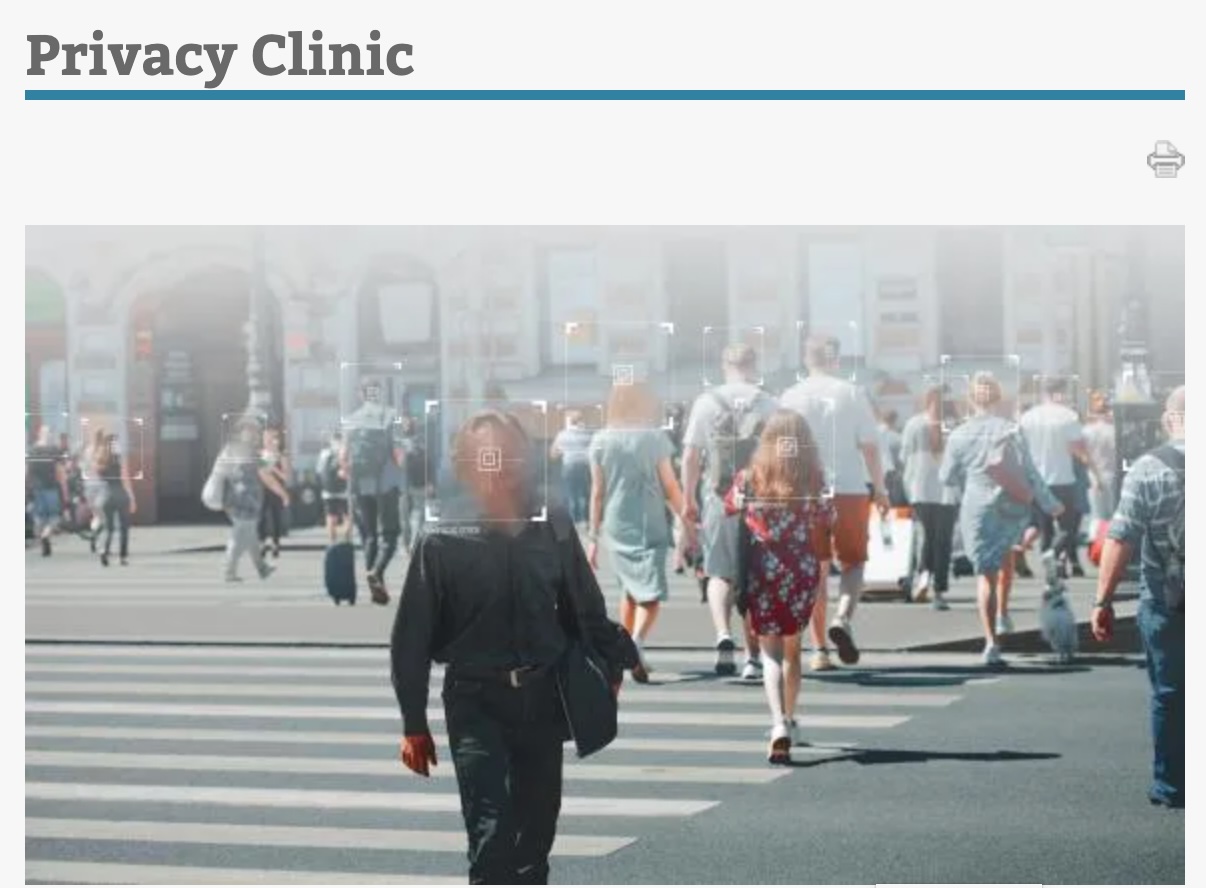
Privacy Engineering for NGOs
We are very happy and proud to announce a research grant awarded to Professor Michael Birnhack, Noa Diamond from the Privacy Clinic at Tel Aviv University, and myself from the Class Action Aid Fund at the Israel Ministry of Justice
Privacy Engineering for NGOs
We are very happy and proud to announce a research grant awarded to Professor Michael Birnhack, Noa Diamond from the Privacy Clinic at Tel Aviv University, and myself from the Class Action Aid Fund at the Israel Ministry of Justice
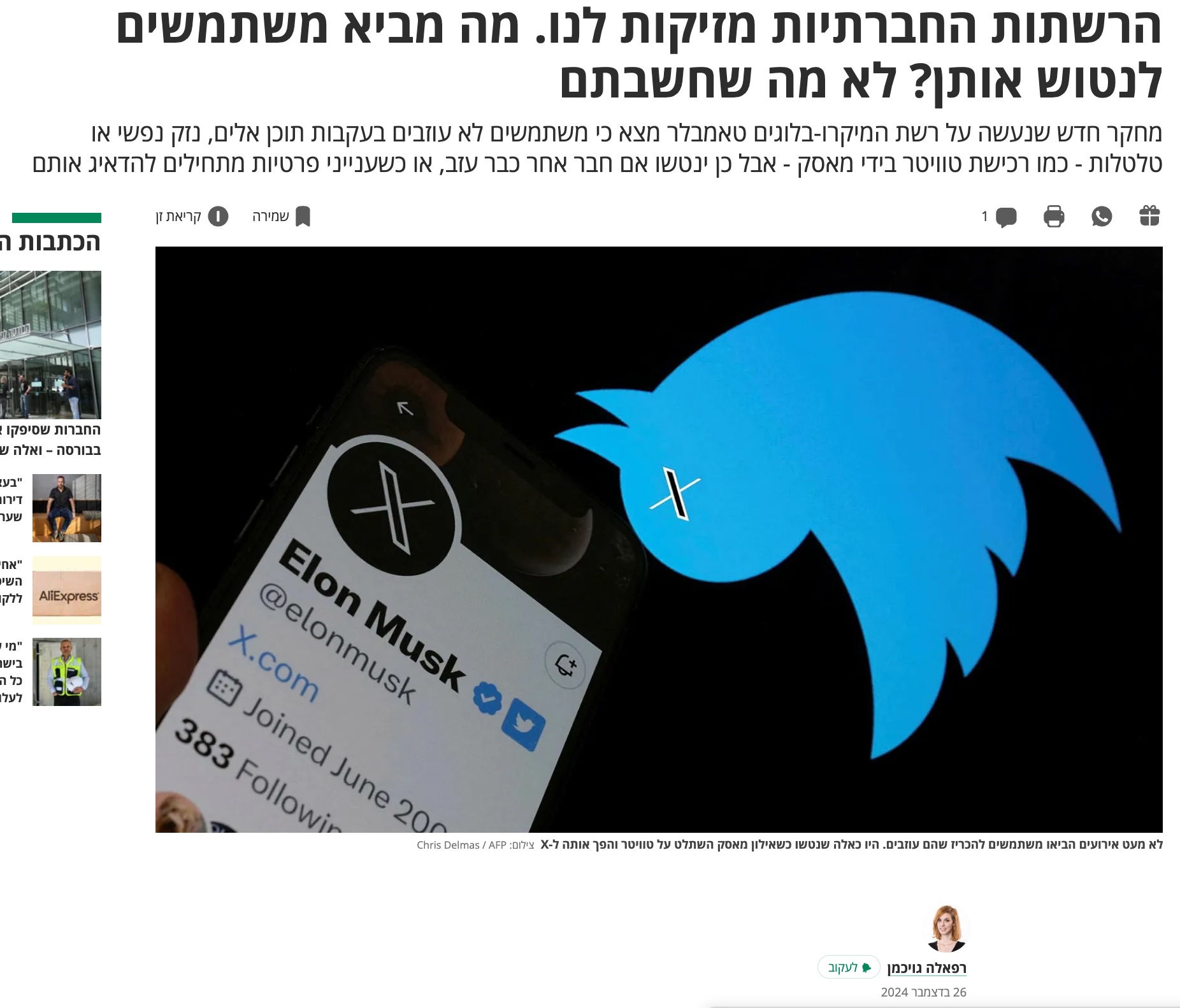
Coverage in Haaretz about our Account Deletion Paper
Our research was recently featured in Haaretz, discussing our paper Cleaning house or quiet quitting? Large-scale analysis of account deletion behaviour on Tumblr into why people delete their social media accounts. Conducted with Ran Wolf and led by the graduate student Ruth
Coverage in Haaretz about our Account Deletion Paper
Our research was recently featured in Haaretz, discussing our paper Cleaning house or quiet quitting? Large-scale analysis of account deletion behaviour on Tumblr into why people delete their social media accounts. Conducted with Ran Wolf and led by the graduate student Ruth
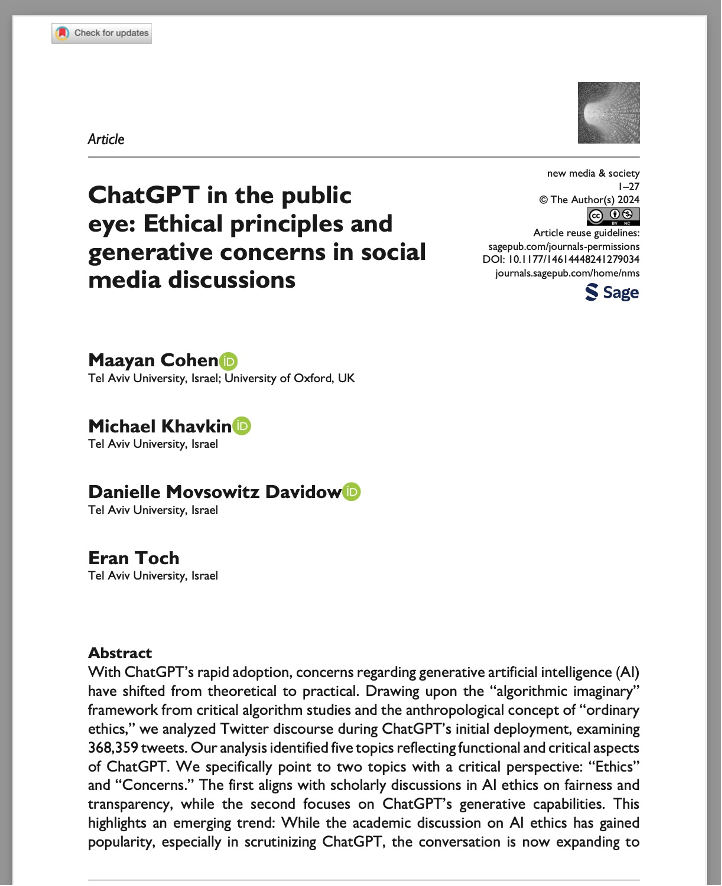
ChatGPT in the Public Eye: Ethical Principles and Generative Concerns in Social Media Discussions
Our recent paper was just published at New Media & Society! “ChatGPT in the Public Eye: Ethical Principles and Generative Concerns in Social Media Discussions”. In the paper, we analyzed 350K tweets in the months following OpenAI’s launch of ChatGPT
ChatGPT in the Public Eye: Ethical Principles and Generative Concerns in Social Media Discussions
Our recent paper was just published at New Media & Society! “ChatGPT in the Public Eye: Ethical Principles and Generative Concerns in Social Media Discussions”. In the paper, we analyzed 350K tweets in the months following OpenAI’s launch of ChatGPT
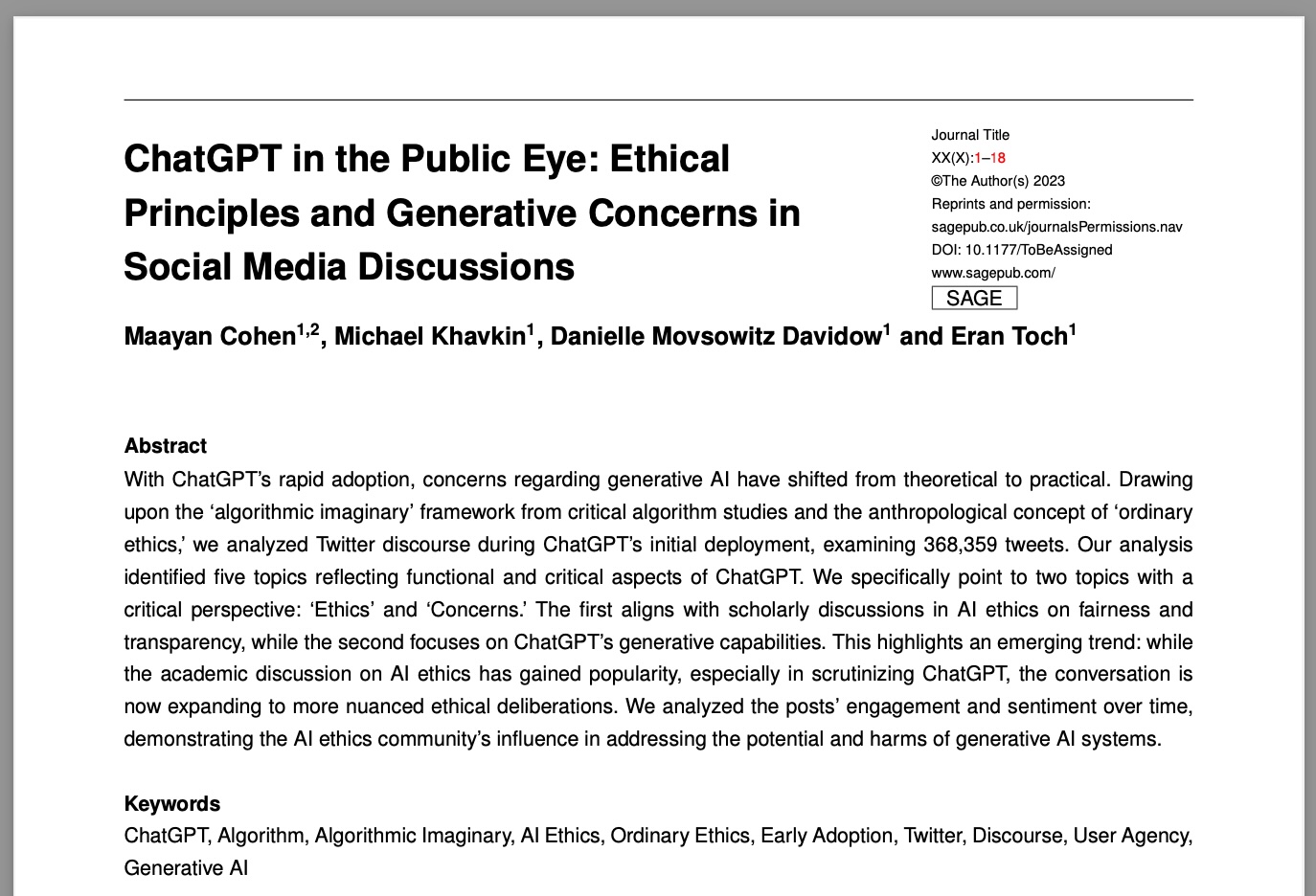
New accepted paper: ChatGPT in the Public Eye
We are happy to announce a new article accepted for publication at New Media & Society: ChatGPT in the Public Eye: Ethical Principles and Generative Concerns in Social Media Discussion. The paper was written in a collaboration between several members of
New accepted paper: ChatGPT in the Public Eye
We are happy to announce a new article accepted for publication at New Media & Society: ChatGPT in the Public Eye: Ethical Principles and Generative Concerns in Social Media Discussion. The paper was written in a collaboration between several members of
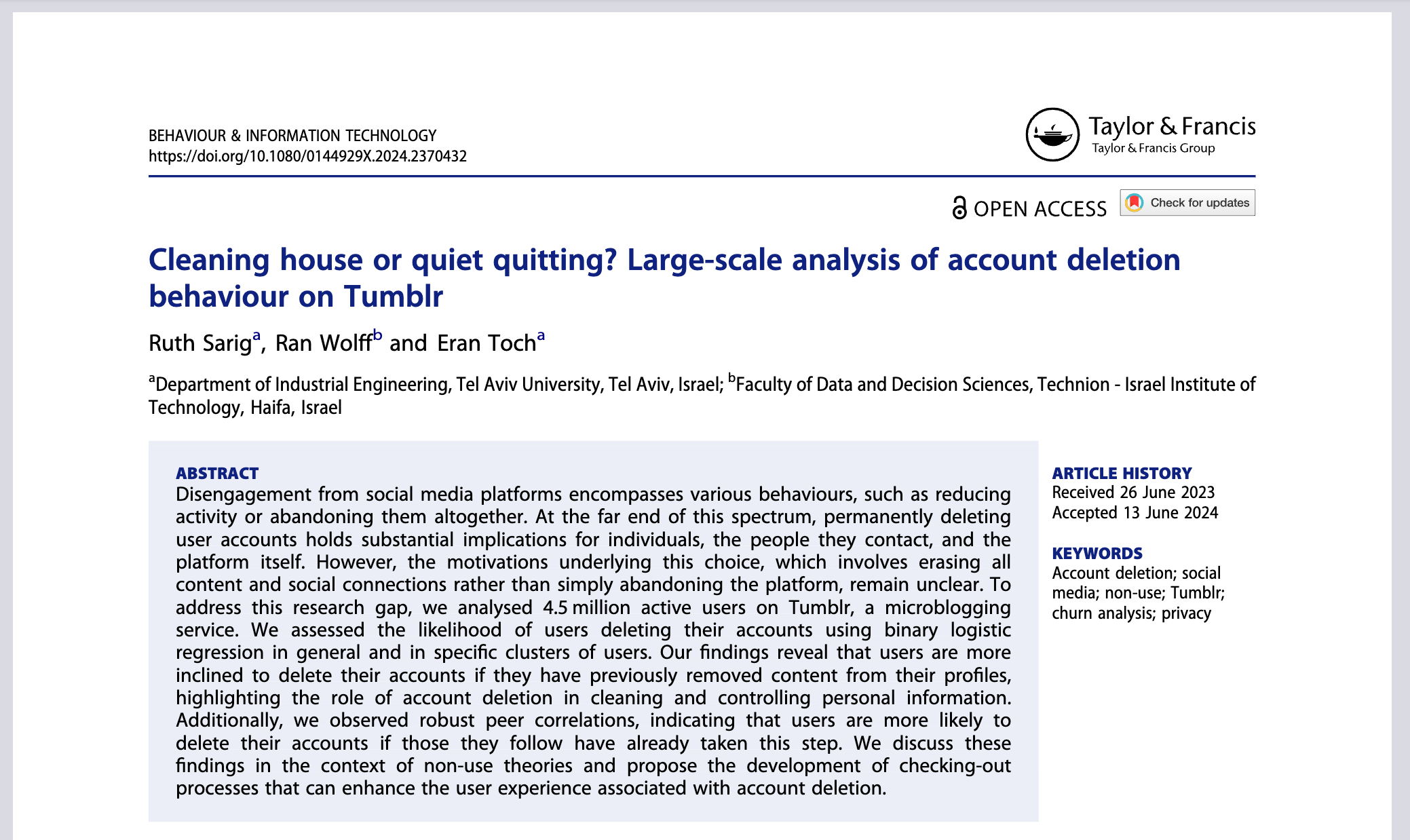
Published paper: Cleaning house or quiet quitting? Large-scale analysis of account deletion behaviour on Tumblr
Have you ever deleted a social media account? Why did you do that? In a new paper, Cleaning house or quiet quitting? Large-scale analysis of account deletion behaviour on Tumblr, we analyzed 4.5 million users to find out why only certain people
Published paper: Cleaning house or quiet quitting? Large-scale analysis of account deletion behaviour on Tumblr
Have you ever deleted a social media account? Why did you do that? In a new paper, Cleaning house or quiet quitting? Large-scale analysis of account deletion behaviour on Tumblr, we analyzed 4.5 million users to find out why only certain people
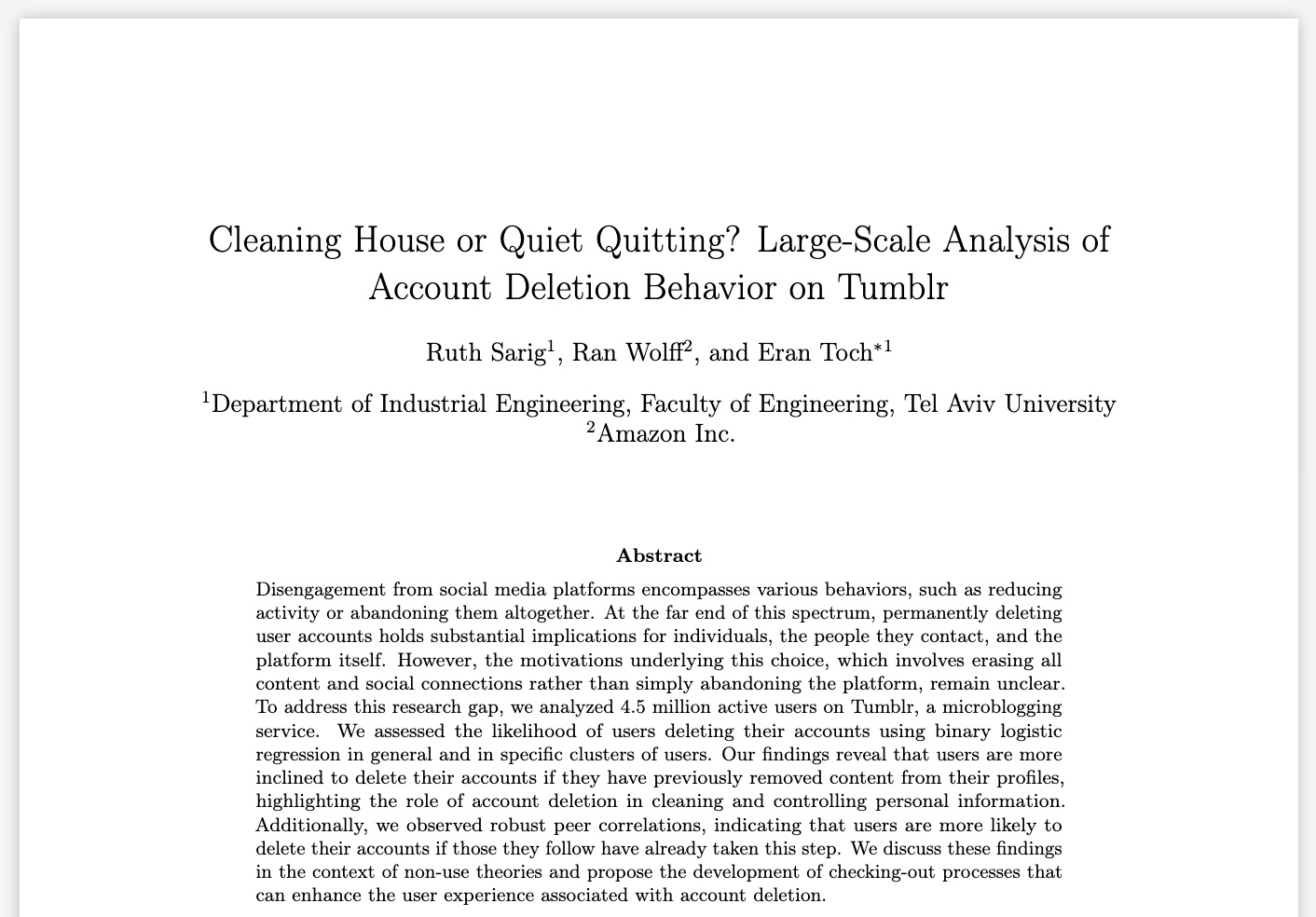
New accepted paper: Cleaning House or Quiet Quitting? Large-Scale Analysis of Account Deletion Behavior on Tumblr
We are happy to announce a new article accepted for publication at Behaviour and Information Technology: Cleaning House or Quiet Quitting? Large-Scale Analysis of Account Deletion Behavior on Tumblr. The paper was based on Ruth Sarig’s Master thesis and in collaboration with Ran
New accepted paper: Cleaning House or Quiet Quitting? Large-Scale Analysis of Account Deletion Behavior on Tumblr
We are happy to announce a new article accepted for publication at Behaviour and Information Technology: Cleaning House or Quiet Quitting? Large-Scale Analysis of Account Deletion Behavior on Tumblr. The paper was based on Ruth Sarig’s Master thesis and in collaboration with Ran
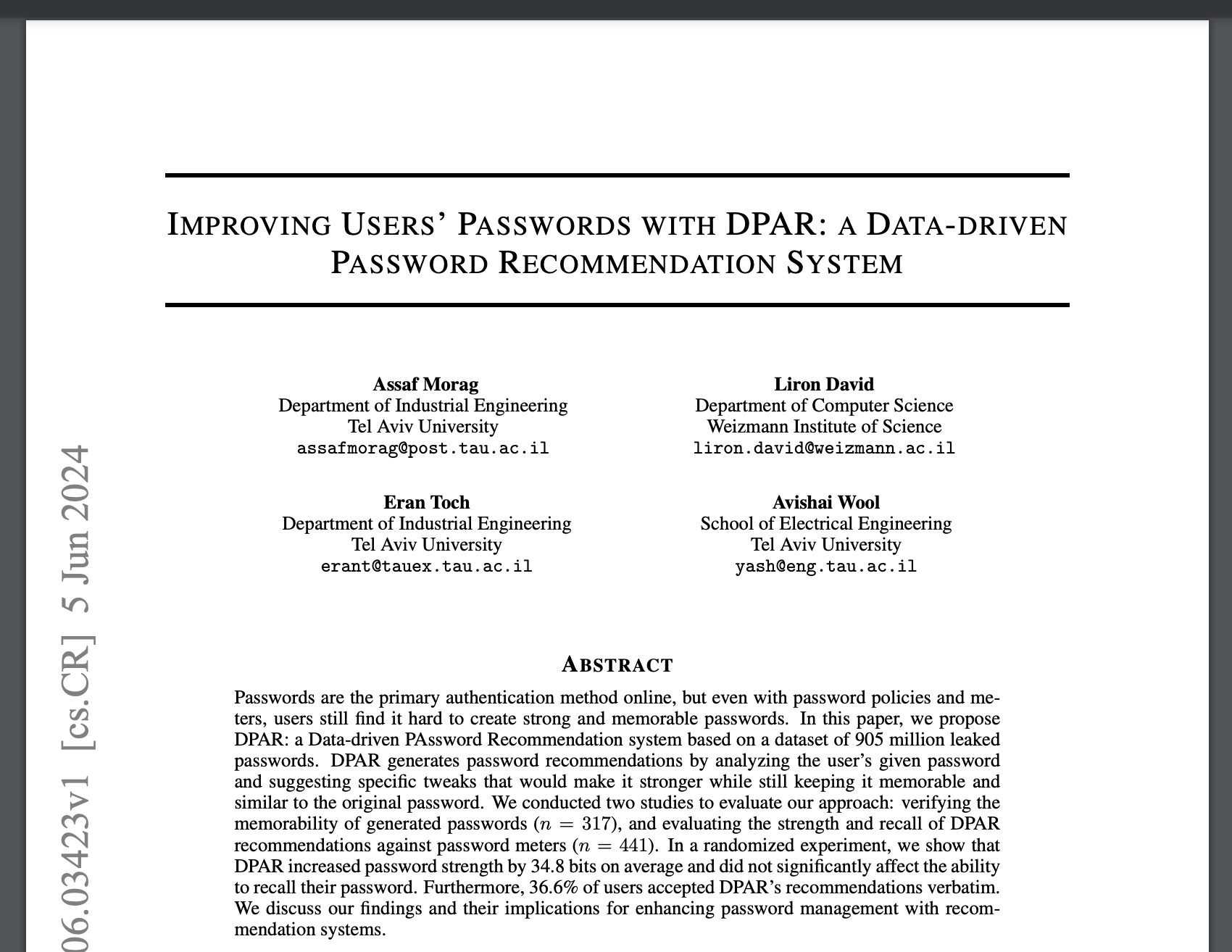
New preprint — Improving Users’ Passwords with DPAR
We are happy to share a new pre-print, titled “Improving Users’ Passwords with DPAR: a Data-driven Password Recommendation System” now available on Arxiv. The paper is based on the thesis work by Assaf Morag, and was done in collaboration with
New preprint — Improving Users’ Passwords with DPAR
We are happy to share a new pre-print, titled “Improving Users’ Passwords with DPAR: a Data-driven Password Recommendation System” now available on Arxiv. The paper is based on the thesis work by Assaf Morag, and was done in collaboration with