Research
Paper published: Crowdsourcing privacy preferences in context-aware applications
Personal and Ubiquitous Computing recently published Eran’s paper, titled: “Crowdsourcing privacy preferences in context-aware applications”. The official link is: http://link.springer.com/article/10.1007/s00779-012-0632-0 The paper tries to answer a simple question: how efficient can crowdsourcing be at predicting privacy preferences in location sharing? The
Paper published: Crowdsourcing privacy preferences in context-aware applications
Personal and Ubiquitous Computing recently published Eran’s paper, titled: “Crowdsourcing privacy preferences in context-aware applications”. The official link is: http://link.springer.com/article/10.1007/s00779-012-0632-0 The paper tries to answer a simple question: how efficient can crowdsourcing be at predicting privacy preferences in location sharing? The
New paper accepted. The emergence of portable private-personal territory (PPPT): Smartphones, social conduct, and public spaces
A new paper was recently accepted to the journal Urban Studies: The emergence of portable private-personal territory (PPPT): Smartphones, social conduct, and public spaces. The paper is a collaboration with Tali Hatuka, the Head of the Laboratory for Contemporary Urban Design, in the
New paper accepted. The emergence of portable private-personal territory (PPPT): Smartphones, social conduct, and public spaces
A new paper was recently accepted to the journal Urban Studies: The emergence of portable private-personal territory (PPPT): Smartphones, social conduct, and public spaces. The paper is a collaboration with Tali Hatuka, the Head of the Laboratory for Contemporary Urban Design, in the
The cost of things: couple of interesting studies
What are the true cost of annoying ads? Or the trust cost of free mobile applications? Two very different studies looked at those questions. This paper, accepted to WWW, used an interesting methodology to vouch the impact of ad annoyance.
The cost of things: couple of interesting studies
What are the true cost of annoying ads? Or the trust cost of free mobile applications? Two very different studies looked at those questions. This paper, accepted to WWW, used an interesting methodology to vouch the impact of ad annoyance.

Two Papers to be presented at Ubicomp’13, Zurich
Ubicomp 2013 will be held in Zurich, Switzerland, next week, at September 8-12, 2013, in Zurich, Switzerland. Our group will present two papers at the conference: Eran will present the paper “Locality and Privacy in People-Nearby Applications” on Wednesday (Sep 11), the
Two Papers to be presented at Ubicomp’13, Zurich
Ubicomp 2013 will be held in Zurich, Switzerland, next week, at September 8-12, 2013, in Zurich, Switzerland. Our group will present two papers at the conference: Eran will present the paper “Locality and Privacy in People-Nearby Applications” on Wednesday (Sep 11), the
New Article: Locality and Privacy in People-Nearby Applications
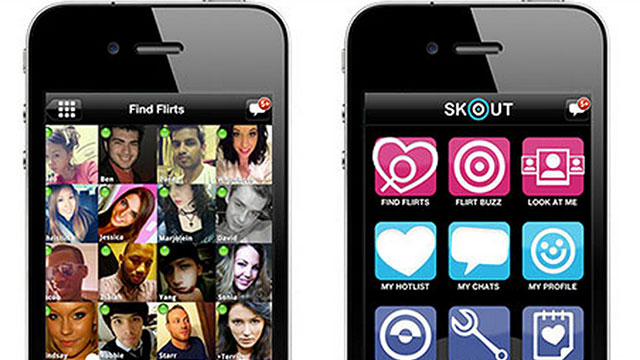
A new article was recently accepted to the Ubicomp conference: Locality and Privacy in People-Nearby Applications. The article, written with Inbal Levi, a research assistant in the group, looks at mobile applications that help users discover new people around them for
New Article: Locality and Privacy in People-Nearby Applications
A new article was recently accepted to the Ubicomp conference: Locality and Privacy in People-Nearby Applications. The article, written with Inbal Levi, a research assistant in the group, looks at mobile applications that help users discover new people around them for
Our new Cyber Grant Project
A new and exciting project is starting in our group: “User-Oriented Security: A multidisciplinary approach.” The project is a collaboration with three other faculty members, Joachim Meyer, Tal Raviv and Irad Ben-Gal, and is sponsored by a 860,000 NIS ($238,000) grant
Our new Cyber Grant Project
A new and exciting project is starting in our group: “User-Oriented Security: A multidisciplinary approach.” The project is a collaboration with three other faculty members, Joachim Meyer, Tal Raviv and Irad Ben-Gal, and is sponsored by a 860,000 NIS ($238,000) grant
What can ‘People-Nearby’ applications teach us?
`People-nearby’ applications, such as Highlight, Grindr and Badoo, are used by millions of users to meet new people online. Eran is presenting an position paper that looks at these applications as a test-case for new location-based technologies. The position paper
What can ‘People-Nearby’ applications teach us?
`People-nearby’ applications, such as Highlight, Grindr and Badoo, are used by millions of users to meet new people online. Eran is presenting an position paper that looks at these applications as a test-case for new location-based technologies. The position paper