Author Archives: erant
Privacy morning colloquium with Prof. Amitai Etzioni, plus our presentation
The Minerva Center for Human Rights is hosting a morning colloquium on contemporary privacy studies, with a keynote by Professor Amitai Etzioni from George Washington University. The colloquium will take place at June 12th, 2014, at the Law School in Tel Aviv University.
Privacy morning colloquium with Prof. Amitai Etzioni, plus our presentation
The Minerva Center for Human Rights is hosting a morning colloquium on contemporary privacy studies, with a keynote by Professor Amitai Etzioni from George Washington University. The colloquium will take place at June 12th, 2014, at the Law School in Tel Aviv University.
The right to be forgotten and Israel’s arcane database registration law. Are the two related?
Several interesting privacy news lately. The European Court of Justice in Luxembourg had ruled that Google, and other search engines, should allow online users to be “forgotten” after a certain time by erasing links to web pages unless there are particular reasons
The right to be forgotten and Israel’s arcane database registration law. Are the two related?
Several interesting privacy news lately. The European Court of Justice in Luxembourg had ruled that Google, and other search engines, should allow online users to be “forgotten” after a certain time by erasing links to web pages unless there are particular reasons
Media Coverage: Learning Mobility Patterns covered in a Haaretz TheMarker Article
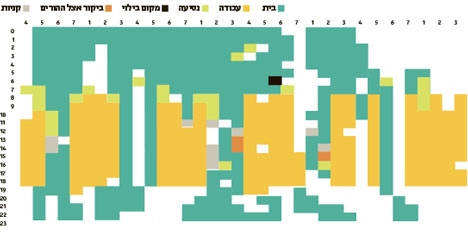
Haaretz’ TheMarker interviewed Irad Ben-Gal, our partner in the Learning Mobility Patterns project. The article, in Hebrew, provided deep coverage of the project, including some cool graphics of our automated calendar models (picture below). The article, however, did not get
Media Coverage: Learning Mobility Patterns covered in a Haaretz TheMarker Article
Haaretz’ TheMarker interviewed Irad Ben-Gal, our partner in the Learning Mobility Patterns project. The article, in Hebrew, provided deep coverage of the project, including some cool graphics of our automated calendar models (picture below). The article, however, did not get
Paper published: Crowdsourcing privacy preferences in context-aware applications
Personal and Ubiquitous Computing recently published Eran’s paper, titled: “Crowdsourcing privacy preferences in context-aware applications”. The official link is: http://link.springer.com/article/10.1007/s00779-012-0632-0 The paper tries to answer a simple question: how efficient can crowdsourcing be at predicting privacy preferences in location sharing? The
Paper published: Crowdsourcing privacy preferences in context-aware applications
Personal and Ubiquitous Computing recently published Eran’s paper, titled: “Crowdsourcing privacy preferences in context-aware applications”. The official link is: http://link.springer.com/article/10.1007/s00779-012-0632-0 The paper tries to answer a simple question: how efficient can crowdsourcing be at predicting privacy preferences in location sharing? The
IUI’2014 in Pictures
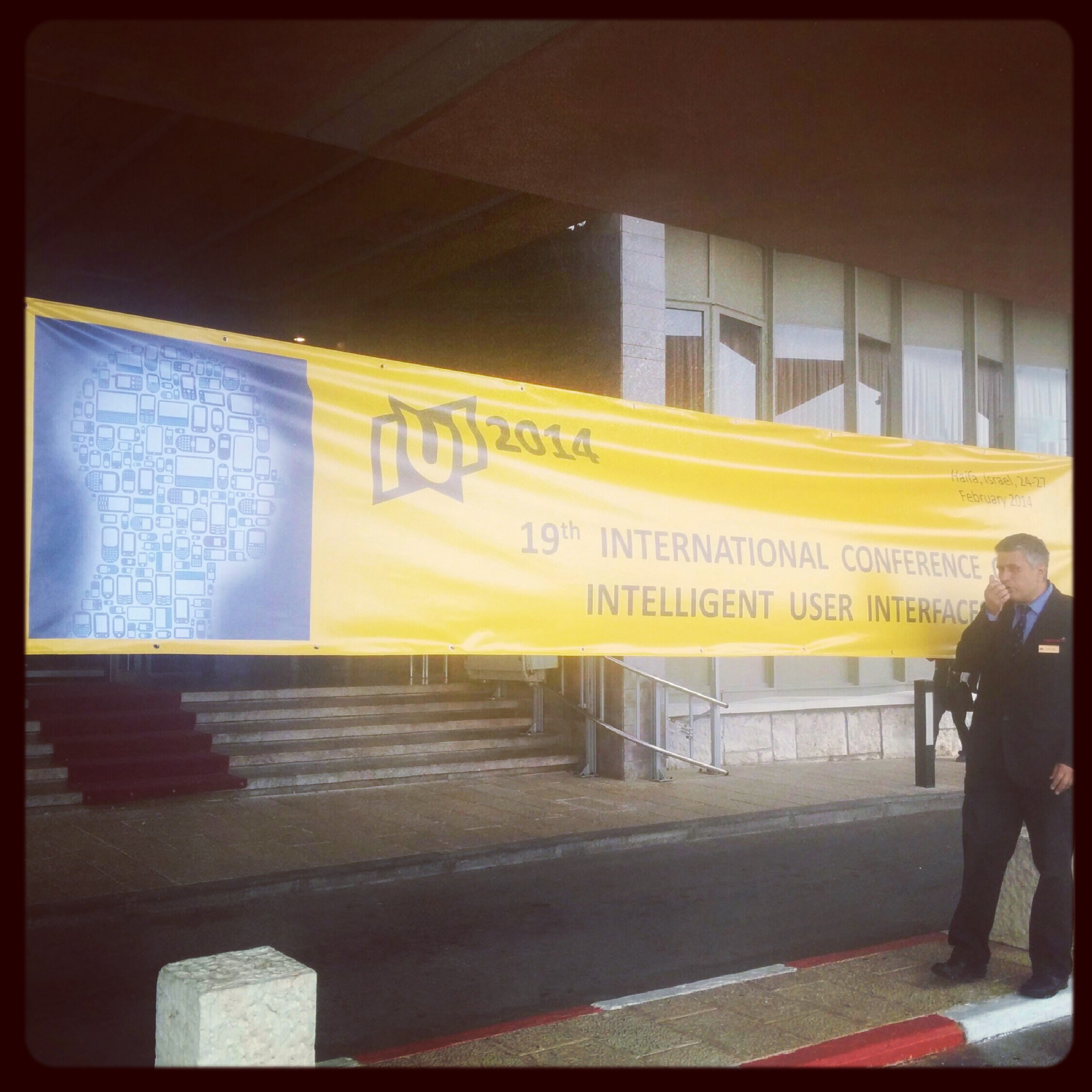
Last thursday, the 2014 International Conference on Intelligent User Interfaces (IUI) came to a close. We are proud to say that Tel Aviv University was one of the official sponsors of the conference, and we were involved in organizing it (Eran was
IUI’2014 in Pictures
Last thursday, the 2014 International Conference on Intelligent User Interfaces (IUI) came to a close. We are proud to say that Tel Aviv University was one of the official sponsors of the conference, and we were involved in organizing it (Eran was
Eran’s lecture in The Molecular Genetics And Biochemistry Department
For some reason, Eran will give a talk on March 3rd about “Privacy challenges in big data analysis”, in the Molecular Genetics And Biochemistry Departmental Seminar at Tel Aviv University (March 3rd 2014, 13:00, Saklar building, room 119.) The talk will be
Eran’s lecture in The Molecular Genetics And Biochemistry Department
For some reason, Eran will give a talk on March 3rd about “Privacy challenges in big data analysis”, in the Molecular Genetics And Biochemistry Departmental Seminar at Tel Aviv University (March 3rd 2014, 13:00, Saklar building, room 119.) The talk will be
Ph.D. Consortium at the Orange Institute
The Orange Institute for Internet Research will hold a Ph.D. Consortium at Monday, March 3rd, 2014. Oshrat will be presenting her research about temporal privacy. The program (in Hebrew), can be found here: http://www.niis.tau.ac.il/text_item.aspx?tid=453
Ph.D. Consortium at the Orange Institute
The Orange Institute for Internet Research will hold a Ph.D. Consortium at Monday, March 3rd, 2014. Oshrat will be presenting her research about temporal privacy. The program (in Hebrew), can be found here: http://www.niis.tau.ac.il/text_item.aspx?tid=453