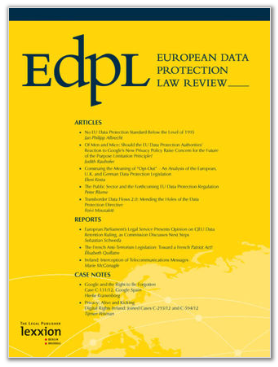
New Paper by Luiza Jarovsky
We are very happy to announce the publication of Luiza Jarovsky at the European Data Protection Law Review. The paper’s title is Improving Consent in Information Privacy through Autonomy-Preserving Protective Measures (APPMs). It looks at privacy nudges and other paternalistic mechanisms and asks whether
New Paper by Luiza Jarovsky
We are very happy to announce the publication of Luiza Jarovsky at the European Data Protection Law Review. The paper’s title is Improving Consent in Information Privacy through Autonomy-Preserving Protective Measures (APPMs). It looks at privacy nudges and other paternalistic mechanisms and asks whether

Keynote lecture: the SPACE Conference
Eran will give a keynote lecture at the 8th International Conference on Security, Privacy, and Applied Cryptography Engineering (SPACE), December 2018 19th, at the Indian Institute of Technology, Kanpur. Eran’s lecture title is: Humans in information security: why people are the weakest
Keynote lecture: the SPACE Conference
Eran will give a keynote lecture at the 8th International Conference on Security, Privacy, and Applied Cryptography Engineering (SPACE), December 2018 19th, at the Indian Institute of Technology, Kanpur. Eran’s lecture title is: Humans in information security: why people are the weakest
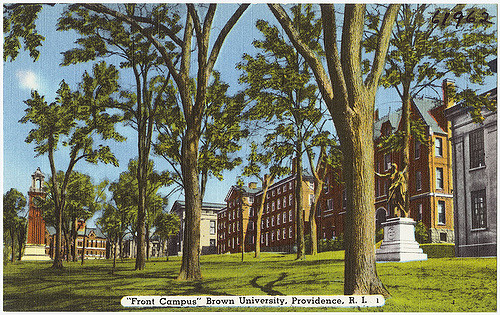
Giving two talks at Brown University
Tomorrow, November 29th, Eran will give two talks at Brown University: 12:00 AM – Smart Cities / Digital Neighborhoods: Privacy, Equality, and Adoption of Urban Technologies (Watson Center for Information Technology, Room 368) 2:00 PM – Understanding and Optimizing Choice architectures
Giving two talks at Brown University
Tomorrow, November 29th, Eran will give two talks at Brown University: 12:00 AM – Smart Cities / Digital Neighborhoods: Privacy, Equality, and Adoption of Urban Technologies (Watson Center for Information Technology, Room 368) 2:00 PM – Understanding and Optimizing Choice architectures

Smart City Conference
In the last two years, the lab was involved in writing a comprehensive guide to urban digitalization. The project team was led by Tali Hatuka and included Hadas Zur and Michael Birnhack, had looked at multidisciplinary problems related to urban planning, law,
Smart City Conference
In the last two years, the lab was involved in writing a comprehensive guide to urban digitalization. The project team was led by Tali Hatuka and included Hadas Zur and Michael Birnhack, had looked at multidisciplinary problems related to urban planning, law,

New paper presented at CLaw – Towards Behavioral Privacy: How to Understand AI’s Privacy Threats in Ubiquitous Computing – Eran Toch, Yoni Birman
A new paper was recently presented at “CLaw: The Fourth International Workshop on Legal and Technical Issues in Cloud and Pervasive Computing”, held in Singapore. The short paper, written by Eran Toch and Yoni Birman, aims to provide a motivation and
New paper presented at CLaw – Towards Behavioral Privacy: How to Understand AI’s Privacy Threats in Ubiquitous Computing – Eran Toch, Yoni Birman
A new paper was recently presented at “CLaw: The Fourth International Workshop on Legal and Technical Issues in Cloud and Pervasive Computing”, held in Singapore. The short paper, written by Eran Toch and Yoni Birman, aims to provide a motivation and

Giving a talk at Weill Cornell: Genomic Privacy in Clinical Settings
Eran will give a talk at Weill Cornell Medicine Hospital, at the Health Informatics Research Seminar, the Department of Healthcare Policy & Research. Title: Genomic Privacy in Clinical Settings Recent advances in genomic technology enable large-scale genome sequencing and analysis for research and clinical care. However, this
Giving a talk at Weill Cornell: Genomic Privacy in Clinical Settings
Eran will give a talk at Weill Cornell Medicine Hospital, at the Health Informatics Research Seminar, the Department of Healthcare Policy & Research. Title: Genomic Privacy in Clinical Settings Recent advances in genomic technology enable large-scale genome sequencing and analysis for research and clinical care. However, this

Cartoon of the Smart City Talk
Gary Zamchick had created this amazing cartoon for my talk on Smart Cities, Privacy and Equality at the Digital Life seminar series. Work with Shahaf Donio, Michael Birnhack, Tali Hatuka, Issi Rosen-zvi, and Hadas Zur.
Cartoon of the Smart City Talk
Gary Zamchick had created this amazing cartoon for my talk on Smart Cities, Privacy and Equality at the Digital Life seminar series. Work with Shahaf Donio, Michael Birnhack, Tali Hatuka, Issi Rosen-zvi, and Hadas Zur.